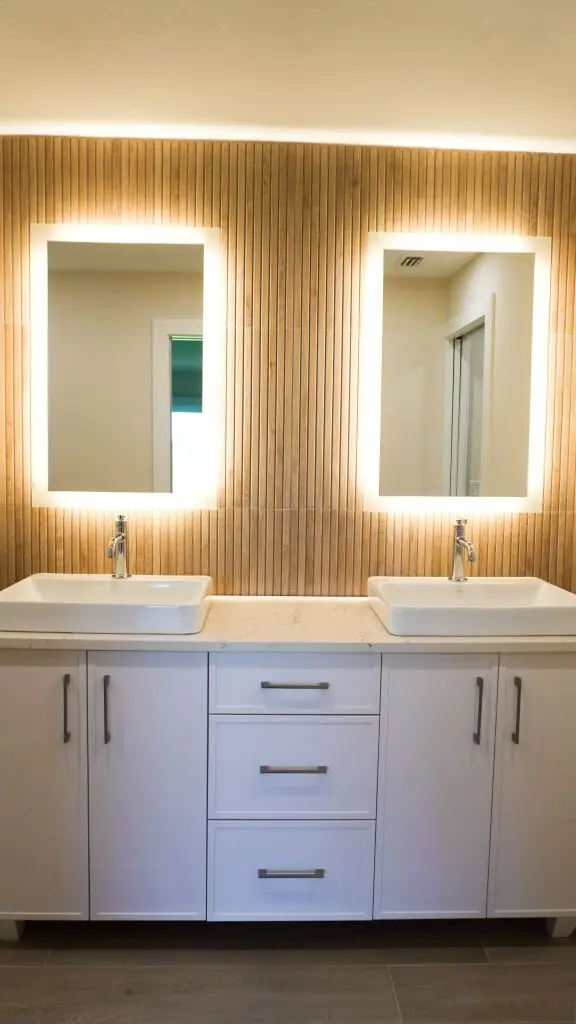
How designers choose bathroom countertop materials in person

Designers choose bathroom countertop materials in person by comparing full-size slabs under real lighting, checking how each material pairs with the sink and vanity style, and testing durability against how the bathroom will actually be used, whether that is a powder room seen mainly by guests or a primary bath used daily. A sample chip or a photo online rarely tells the whole story, which is why a showroom visit, not a screen, is where these decisions get made well.
Searches like bathroom countertop materials or bathroom materials near me usually come from someone standing at the very start of a remodel, unsure whether to want granite, quartz, or something else entirely. The honest answer is that the right material depends on the bathroom’s use, its lighting, and the sink style it needs to support. Here is how designers actually work through that decision when a client sits down with them.
Why bathroom countertop decisions are different from kitchen ones
A kitchen countertop deals with heat, knives, and heavy daily use. A bathroom countertop deals with something else entirely: standing water around the sink, makeup and skincare products that can stain porous surfaces, and a much smaller footprint where every inch of pattern and color is visible up close.
This changes what actually matters in the decision. A dramatic, high-movement stone that would dominate a large kitchen island can overwhelm a small vanity top. A material with slightly more porosity might be fine on a kitchen perimeter counter but a poor choice around a bathroom sink where water sits daily. Designers weigh these differences before ever discussing color.

The five things designers check in person
When a client brings in a Pinterest board or a photo from a magazine, a good designer does not just try to match the picture. They walk through a short, consistent process:
- Slab size and veining. A vanity top is often one continuous piece, so how the pattern moves across that specific size matters more than it would on a larger kitchen counter cut from several slabs.
- Finish. Polished, honed, or leathered finishes change both the look and the maintenance. A honed finish shows fewer fingerprints and water spots around a sink, which matters in a space that gets touched constantly.
- Edge profile. A small design detail, but it changes how the countertop reads next to the vanity cabinetry and the sink style.
- Sink compatibility. Undermount, vessel, and integrated sinks each require different countertop thickness and cutout work, so material and sink are chosen together, not separately.
- How it performs wet. A designer will often set a water sample directly on a slab in the showroom to see how it beads or absorbs, since this tells you more about daily performance than any spec sheet.
None of this can be done accurately from a phone screen, which is the entire reason showroom visits still matter even in a world of endless online material boards.
Comparison: common bathroom countertop materials
| Material | Durability | Maintenance | Look | Best for |
|---|---|---|---|---|
| Granite | Very durable, resists scratches and heat | Occasional sealing recommended | Natural, varied veining, wide range of colors | High-traffic primary baths |
| Quartz | Very durable, non-porous | Low maintenance, no sealing needed | Consistent pattern, wide color range including solid colors | Busy family bathrooms, low-upkeep preference |
| Quartzite | Extremely durable, harder than granite | Occasional sealing recommended | Natural stone look, often marble-like | Statement vanities, primary baths |
| Marble | Softer than the others, can etch or stain | Regular sealing needed, careful product use | Classic, elegant veining | Powder rooms and low-use guest baths |
| Solid surface | Durable, repairable if scratched | Low maintenance | Seamless look, integrated sink options | Bathrooms wanting a seamless sink-to-counter look |
This table is a starting point, not a substitute for seeing the material in person. Two granite slabs can look completely different from each other, and the only way to know what you are actually getting is to see the specific piece.
Sink and countertop combinations
A bathroom vanity countertop is rarely chosen on its own. The sink style has to work with the material, both functionally and visually:
- Undermount sinks need a countertop material that can be cut cleanly and finished at the edge, since that edge is visible around the entire sink.
- Vessel sinks sit on top of the counter, which means the countertop surface itself becomes more visible and often calls for a simpler, quieter material so the vessel sink can be the visual focus.
- Integrated sink and countertop combos, often in solid surface material, create a seamless look with no seam between sink and counter, which also means fewer grout lines or joints where grime can collect.
A designer walking through this in person can hold up sink options against actual slab samples, which is nearly impossible to judge from separate product photos online.
Lighting and color
Florida’s light is intense and consistent for most of the year, which changes how bathroom finishes read compared to a home in a more overcast climate. A cool white countertop that looks crisp in a north-facing bathroom in another region can look almost sterile in a bright, sun-filled Florida bath, while warmer stone tones tend to hold up better against that light throughout the day.
This is part of a broader shift some designers are describing in Florida interiors: warmer, more layered neutrals in place of the cooler grays and whites that were common a few years ago. Florida Design Works covers this in more detail in Warm Neutrals for Coastal Interiors, which is worth a look if you are still deciding on an overall palette before choosing individual materials.
Where to see these materials in person
Florida Design Works offers granite, quartz, quartzite, marble, and solid surface countertops, along with design consultation to help match material to sink style and bathroom use. The company has been in this business for more than 57 years and works with quartz brands including Cambria, Caesarstone, Pompeii, Silestone, and VEON, alongside natural stone options.
Countertop showrooms are available across the company’s Florida locations, including Sarasota and Naples, with the Sarasota location operating a full granite shop and in-house fabrication on site. Visit the full locations page to find the showroom closest to you and confirm what is available there before your visit.
How designers choose bathroom
countertop materials in person
Designers choose bathroom countertop materials by comparing full-size slabs under real lighting, checking how each material pairs with the sink and vanity style, and testing durability against how the bathroom will actually be used.
Different room, different priorities
Kitchen counters deal with heat, knives, and heavy daily use. Bathroom counters deal with standing water, makeup and skincare products, and a smaller footprint where every inch of color and pattern is seen up close.
Five things designers check in person
Slab size and veining
A vanity top is often one continuous piece, so how the pattern moves across that specific size matters.
Finish
Polished, honed, or leathered finishes change both the look and the maintenance around a busy sink.
Edge profile
A small detail that changes how the countertop reads next to cabinetry and the sink style.
Sink compatibility
Undermount, vessel, and integrated sinks each require different material thickness and cutout work.
Wet performance
Testing how water beads or absorbs on the slab tells you more about daily performance than a spec sheet.
A quick guide to bathroom countertop options
Very durable and heat resistant, with natural veining and a wide color range. Occasional sealing is recommended.
Nonporous, low maintenance, and available in consistent patterns and solid colors. No sealing needed.
Extremely durable and harder than granite, with a natural stone look that often resembles marble.
Classic and elegant, but softer and more vulnerable to etching and staining. Best for lower-use bathrooms.
Durable, repairable, and available in seamless integrated sink options.
Choose the sink and material together
Undermount sinks need a countertop that can be cut cleanly and finished at the edge. Vessel sinks make the counter surface more visible, so a quieter material often works better. Integrated sink and countertop combinations create a seamless look with fewer joints where grime can collect.
Florida light changes how finishes read
Florida’s intense, consistent light can make a cool white countertop feel almost sterile in a bright bathroom. Warmer stone tones tend to hold up better against that light throughout the day, which is part of the broader shift toward warmer, more layered neutrals in Florida interiors.
A sample chip or photo online rarely tells the whole story. Seeing full slabs under real lighting, next to your sink and vanity choices, is how designers make confident bathroom countertop decisions.
Frequently asked questions
What is the best countertop material for a small bathroom vanity?
Quartz and solid surface are popular for small vanities because they offer consistent color and low maintenance, though quartzite and granite work well too if you want more natural variation. The right choice depends on how the bathroom is used day to day.
Is granite or quartz better for bathroom countertops?
Granite is a natural stone with more color and pattern variation, and benefits from occasional sealing. Quartz is engineered, non-porous, and needs no sealing, making it a lower-maintenance option. Both are durable enough for daily bathroom use.
Can I match my bathroom countertop and sink in one piece?
Yes, solid surface countertops can be fabricated with an integrated sink, creating a seamless look with no joint between the sink and counter.
Why does bathroom lighting matter when choosing a countertop material?
Light changes how color and veining appear. A material that looks right under a showroom’s lighting may read differently under your bathroom’s natural or artificial light, which is why seeing a sample in your own space, or at least understanding your bathroom’s light conditions, matters before ordering.
Where can I see bathroom countertop materials in person near me?
Florida Design Works has showrooms in Sarasota, Naples, Jacksonville, Miami, and Tampa, each offering countertop materials and design consultation. Check the locations page for the one nearest you.
Pelican Harbour Kitchen & Bathroom Remodel
After the 2024 hurricane season, the homeowner experienced extensive interior damage that required a complete restoration. Due to water intrusion and structural issues, all flooring and cabinetry needed replacement.
The client viewed this project as an opportunity to modernize their interiors. Their goal was to restore functionality while creating a cohesive, durable design that enhances daily living and is better prepared for future challenges.